
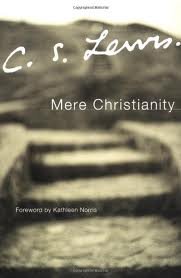
Most of us find it very difficult to want “Heaven” at all—except in so far as “Heaven” means meeting again our friends who have died. One reason for this difficulty is that we have not been trained: our whole education tends to fix our minds on this world. Another reason is that when the real want for Heaven is present in us, we do not recognize it. Most people, if they had really learned to look into their own hearts, would know that they do want, and want acutely, something that cannot be had in this world. There are all sorts of things in this world that offer to give it to you, but they never quite keep their promise.
C.S. Lewis—Mere Christianity
Slugs

I kinda like slugs.
I don’t want them on me, of course. But they can be kind of funny looking. Like in the movie “Flushed Away”.
When my girl Keli was little little, she went over to our pastor’s house to play with his daughter. We picked her up afterwords, and as we were driving home, she made this announcement: “Pastor Olcott has DRUGS all over his house!” After a few moments of questioning her, we figured out she meant SLUGS–she and her friend Annaliese had been searching for slugs outside in their yard.
While watching slugs is one thing, being a slug is a completely different thing.
Sure, there are times when we need to be slugs. When our bodies and mind need rest. When there is so much going on and our minds are in overdrive, that we find ourselves taking a slug night—-curled up in Jammies, with a mindless book or mindless movie. But that’s not the kind of slug I’m writing about tonight either.
No, the kind of slug I’m addressing is something I’m having to fight in my own life right now, and maybe you have seasons of fighting it, too.
The verse that applies to this condition of sluggishness is found in the book of Hebrews, in chapter 6:11-12:
The point of these verses is to encourage believers to persevere until the end. The end of what? The end of life here on this earth, whether we die and go home to heaven, or Jesus returns during our lifetime.
I love the word “earnestness” or “earnest”. It means to show full seriousness in intention and purpose. It is deliberate. It is thought out. It is real.
The entire book of Hebrews is an encouragement for believers to persevere until the end, but what does that look like? First and foremost it demands hope. Doesn’t suggest it, no–it demands it. We have to have hope in order to persevere to the end, and we have to have the “earnestness to have the full assurance of this hope.” It is not nothing. It is not to be taken lightly.
I don’t know about you, but I find that hope tends to be an elusive thing in my life. I have to intentionally fight for it–fight for what I know is truth to battle the hopelessness that attacks me in the mornings when I’m facing another day. To battle the hopelessness that attacks me and tells me “You have no future”. To battle the hopelessness that swirls around me in the middle of the night when I am awakened from a nightmare. To battle the sin of unbelief, because that’s where hopelessness arises from.
How do we fight hopelessness? Through spiritual disciplines. Through service. Through fighting sluggishness, which we will take a look at next.
Verse 12 hits the nail on the head: “so that you may not be sluggish,”. Good grief. I know full well this kind of sluggishness.
What does a coach do when he recognizes that his athlete is becoming sluggish? He typically pushes him or her. To go farther, to go harder, to go faster. They would never reach their goal if they were allowed to remain sluggish. No; and we cannot persevere to the end in hope if we continue in sluggishness.
Instead of being sluggish, we are to be imitators–imitators of “those who through faith and patience inherit the promises”. Like Abraham (see verses 6:13-15) Abraham was patient. He was not sluggish. He was hopeful. He persevered, never giving up His belief or faith in God.
What about you? What about me? I’m preaching this mostly to myself. I’m in a very sluggish place right now. A restless place. A place where hope is once again elusive. I don’t want to be here. I don’t want to give up. God has brought my crew and I so far, that to give up now would be cowardly. Would be a waste. Would be sinful.
But that doesn’t mean that the desire to give up isn’t there.
We must fight this sluggishness, through spiritual disciplines. Yes, the common ones we think of: prayer, reading Scripture, attending worship. But also ones we might not recognize as spiritual disciplines. Singing. Worship. Exercise. Getting enough rest. Fellowship with others. Corporate worship, which I foolishly neglected today in a fog of hopelessness.
I’ll close by saying this: Tuesday night I start teaching a Bible Study on the book of James. This is a giant step forward for me. Because I can’t hide if I’m teaching. I can’t lock myself away from the world if I am teaching. I have a responsibility to bring the truth of scripture to a group of ladies, and I take that responsibility very seriously. I am excited. But I am also anxious. Anxious because this will be the most interaction I’ve had with people since my ex-husband was arrested.
I think I am ready. I know I am ready. But I also know that only by God’s grace will I be able to stand fast and share from Scripture what He would have us to learn together.
I found this list by Jon Bloom, on how to fight this sluggishness. I’ve typed it up, printed it out, and tacked it to my board above my desk:
- Identify the doubt. Sluggishness has a cause. What is sapping your faith?
- Repent. Unbelief is a sin. Seek to actively turn from it.
- Target that unbelief with biblical truth. Stop whatever else you may be doing for devotional reading and focus on and pray through texts that deal directly with this issue. Lay aside your other book reading and read things that address this doubt.
- Don’t go it alone. Humble yourself and share your struggle with trusted counselors God has given you. Our great Coach often speaks through assistant coaches (Hebrews 3:13).
Maybe you are in a sluggish place, too. Maybe you need to pray the verse in Hebrews 12: 12-13 that I’m praying as I go forward to slay this sluggishness and do what God has called me to do:
My Summer Reading Plan and Recommendations

Summer is here, and it’s time to decide on my Summer Reading Plan. As I’ve done in the past, I’m sharing it with you, in hopes that you’ll find a book that piques your interest. You can click on the pictures of the books and it will take you to their Amazon page. Also, I’d love to hear what you are planning to read this summer!
1. And the Mountains Echoed by Khaled Hosseini
I have already started reading this, and am pretty absorbed in it. It’s written by the same author as The Kite Runner and A Thousand Splendid Suns. Here’s the Amazon description:
Khaled Hosseini, the #1 New York Times–bestselling author of The Kite Runner and A Thousand Splendid Suns, has written a new novel about how we love, how we take care of one another, and how the choices we make resonate through generations. In this tale revolving around not just parents and children but brothers and sisters, cousins and caretakers, Hosseini explores the many ways in which families nurture, wound, betray, honor, and sacrifice for one another; and how often we are surprised by the actions of those closest to us, at the times that matter most. Following its characters and the ramifications of their lives and choices and loves around the globe—from Kabul to Paris to San Francisco to the Greek island of Tinos—the story expands gradually outward, becoming more emotionally complex and powerful with each turning page.
2. Faithful God: An Exposition of the Book of Ruth by Sinclair Ferguson
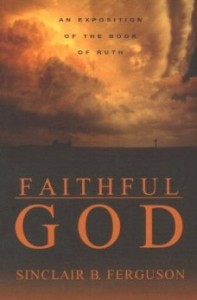
I’ve always wondered if there is more to the book of Ruth then what I see at first glance. This books suggests that there is much more, and that in fact, it teaches us about Jesus. I’ve only skimmed the book of Ruth, but I know the “story”. I’m looking forward to looking deeper into this small book of the Bible.
3. Weakness is the Way: Life with Christ Our Strength by J.I. Packer

Amazon Description:
For Christians, weakness should be a way of life. Yet most of us try desperately to be sufficient on our own, and we resent our limitations and our needs.
Renowned theologian and Bible teacher J. I. Packer reflects on his experience of weakness—having been hit by a bread truck at a young age and now facing the realities of aging—in order to teach us the importance of embracing our own frailty, and also to help us look to Christ for strength, affirmation, and contentment. Find here a path from discouragement to freedom in light of our all-sufficient God.
4. Stom Kings: The Untold History of America’s First Tornado Chasers by Lee Sandlin

I “borrowed” this book from Dr. Al Mohler’s summer reading list. I’ve always been fascinated by storms, and this looked like it would be just quirky enough to be my “off the beaten path” book for the summer. Here’s a review:
“Storm Kings is not merely a theoretical or data-driven history of tornados and meteorology. Using his skills as a brilliant storyteller, Lee Sandlin places the reader in the middle of a storm, where he becomes an eyewitness to the helplessness, fear, destruction, and psychological aftermath of tornados. . . . Lee Sandlin uses the old song about “ghost riders in the sky” as a metaphor for today’s amateur storm chasers who continue in the tradition of James Espy and John Park Finley. Professionals and amateurs alike continue their quest—thundering onward across the endless skies. . . . The author takes us along for the ride. Readers will definitely feel its gale force.”
—New York Journal of Books
5. Rhythms of Grace: How the Church’s Worship Tells the Story of the Gospel
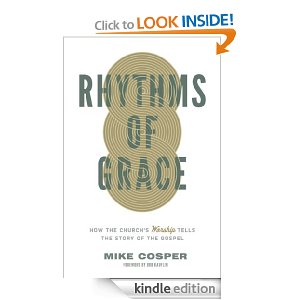
Since joining a new Sunday School class that is loosely centered around studying Worship, I’ve become more interested in Worship as a spiritual discipline and a means to share the Gospel. That’s exactly what this book sets out to convey. I’m also surveying it to see if it would be a good book to study with a small group.
6. 7 Men and the Secret of Their Greatness by Eric Metaxas

I’ve read so many really great reviews on this book. It examines the lives of 7 men: George Washington, William Wilberforce, Eric Liddell, Dietrich Bonhoeffer, Jackie Robinson, John Paul II, and Charles Colson. Much to be learned from each of these men–I’m looking forward to this being my (sort-of) biography for the summer.
7. The Mystery of the Holy Spirit by R.C. Sproul
This book I’m actually forcing myself to read. I’ve come to terms with God being God and Jesus being Jesus, but I am totally mystified by the Holy Spirit. I understand that the Spirit is part of the Trinity, but I certainly don’t understand trinity and I don’t understand the Holy Spirit. I’m hoping this will help shed some light on the many questions I have about this subject or “person”.
8. The Insanity of God by Nik Ripken and Gregg Lewis
Amazon description: The Insanity of God is the personal and lifelong journey of an ordinary couple from rural Kentucky who thought they were going on just your ordinary missionary pilgrimage, but discovered it would be anything but. After spending over six hard years doing relief work in Somalia, and experiencing life where it looked like God had turned away completely and He was clueless about the tragedies of life, the couple had a crisis of faith and left Africa asking God, “Does the gospel work anywhere when it is really a hard place? It sure didn’t work in Somalia.
How does faith survive, let alone flourish in a place like the Middle East? How can Good truly overcome such evil? How do you maintain hope when all is darkness around you? How can we say “greater is He that is in me than he that is in the world” when it may not be visibly true in that place at that time? How does anyone live an abundant, victorious Christian life in our world’s toughest places? Can Christianity even work outside of Western, dressed-up, ordered nations? If so, how?
9. Engaging with God: A Biblical Theory of Worship by David Peterson
Another Worship book, but this one draws me to it because of the author’s exploration of worship in both the Old and New Testaments:
Through careful exegesis in both Old and New Testaments, David Peterson unveils the total life-orientation of worship that is found in Scripture. Rather than determining for ourselves how we should worship, we, his people, are called to engage with God on the terms he proposes and in the way he alone makes possible.
10. The Silver Star: A Novel by Jeanette Walls

A mindless book to end the summer with. I’ve read some of her other books; she’s a good author who can tell a good story.
5 Simple Words: God saw….and God knew. (Brief)
It’s 1:30 AM on Friday morning, and I wonder if sleep will come again this night, or is it to be just one more sleepless night in a long string of sleepless nights. Sleepless nights and short nights are a big source of discouragement in my life. I wonder if they will never end.
But as I’ve sat here and settled down some, I’ve recalled a verse that I’m sure I’ve written about before. It’s found in Exodus 2:25:
25 God saw the people of Israel—and God knew.
I love this verse, the simplicity of it. The verse before this verse states that God heard the groaning of the Israelites and He remembered His covenant with them. And then the chapter ends with 3 simple words: “And God knew.”
I know this verse is speaking about the people of Israel in their captivity, and I want to be careful to never read something into scripture that isn’t there, or remove scripture from its contents.
But on this discouraging night, I am praying that this is truth for me, too. That God heard the groaning in my sleep as I tossed and turned. That God sees me right now, though I sense Him not.
But most of all, I pray earnestly, fervently, that God knows.